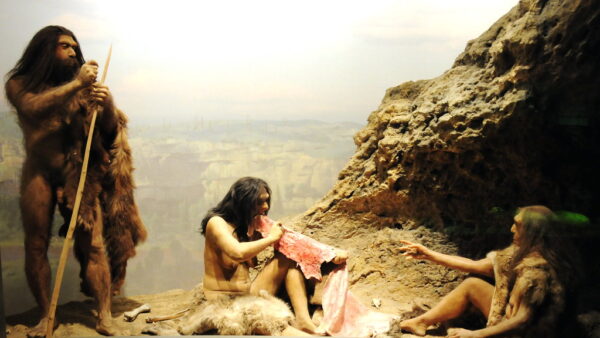
The Beginnings of City Life with Primitive Man
Primitive people did not develop into civilized people millions of years. Man reached the transition from food gatherer to food producer roughly 3,00,000 years ago. Once the crust started generating food, a man developed quickly. Men advance faster the more control they have over the surroundings.
Men were first migratory, that is, they would travel in flocks from one location to another in quest of food and cover. Usually a herd consisted in men, women, and children. From the perspective of security, living in a community was preferable than living alone.
Primitive People to Reach Civilized State
Indeed, life in ancient days was quite challenging since people hunted the animals they could find and ate the fruits of trees. Had no idea how to grow grains. They thus had to migrate to another region in quest of sustenance when they had consumed all that nomadic people could find in one area. Likewise, they had to find another area for prey after they hunted most of the creatures discovered in one location.
People used to dwell in caves only, should they exist anyplace. Otherwise, they would cover themselves among the leafy limbs of large trees. Two things caused him anxiety: the temperature and wild animals. Primitive man found it incomprehensible why clouds thunder or why lightning flashes. And man is terrified of something when he doesn’t know why it’s happening. Using their natural habitat—the forests—ferocious animals including tigers, lions, leopards, dwathi, and rhinoceros roamed in India during those times.
Weak in comparison to these animals, the man had to either kill them with his poor weapons or hide in trees and cavernues to defend himself. Still, a fire was the best defense against endangering these species.
A fire was started at the mouth of the cave at night when every animal gathered there. Faced with fire, the animals stayed out of the cave. In winter and rainy evenings, fire gave them solace and defense. Discovering the fire happened by mistake.
Weapons and Equipment
The valley of the Sohan river in Punjab has produced some such items. Some regions, like the valley of Kashmir, have Additionally created from animal bones were weapons and tools. From massive stone blocks suited for a man’s stomach Axes and hammers were fashioned. At first, the limbs of trees, etc. were chopped with monastic axes.

Later on, it was connected to a pole, so its power grew and it was put further use. Tools helped man much as they do now. These let him dig the dirt, chop branches of trees, kill animals, shape stone and wood. Often shavings from bigger pieces, small bits of stone were meticulously carved to a sharp edge and subsequently turned into serfs or flails for exquisite work. Tied with arrows or spears.
Age of Primitive Man: Stone
Primitive people generally lived near rivers or streams for the ease of access to water. Sometimes you can find such a tool of ancient worth if you closely examine the sections of the rivers of the foothills of the Himalayas or some areas of the Deccan Plateau, such the valley of the Narmada. These instruments are Ashshoffkaran among archaeologists.
Simple stone tools used for hunting and other uses are the only traces of thousands of years of early human existence. Often found in caves and rock shelters where people lived or along river banks where prehistoric humans prowled in search of prey for wild animals, these implements are This epoch is known as the Stone epoch since stone tools were rather common throughout it.
Early (Pura), Middle, and Uttara Stone Age is split according on the type of stone tools employed. For his meals, the man nearly entirely relied on the surroundings. Using his crude tools, he accomplished a lot including skinning dead animals, cutting their flesh, and breaking their bones.
Experience taught him what kind of instruments were created for unique purposes and how to gradually remove the stones. Tools fit three distinct categories based on the three phases of human growth.
Starting a still life and a clothes project
Regarding clothing, primitive males had not much trouble at all. He used to stroll in worn clothes during the summer. On rainy or cold days, clothing came from dead animals, tree bark, or big leaves. coiled around the torso The body would have stayed warm with one or two mug charms.
Man’s want to enjoy a life of more comfort grew as he become more conscious of his surroundings. The living circumstances of man also changed along with some fresh discoveries. Among these, growing food and tending to plants turned out to be the most significant man discovery. He discovered that watering seeds placed in the ground helps plants grow. Agriculture was only begun here.
This was a significant revelation since people no longer had to migrate in quest of sustenance. His wandering existence came to an end; he now began his permanent farming career. These variations in human way of life occurred in several areas of India at different times. Usually, these developments occurred four to five thousand years ago in most parts of our nation.
Animal Care
Manayya made still another incredible finding. He learned he could employ wild animals for his labor as they could be domesticated. For instance, wild goats just could be slaughtered, and their meat is consumed. Domesticated goats could, however, be milked daily, additional goats could be generated from them, and some of them could even be eaten.
There was no necessity for hunting thus. For people, keeping a dog turned out to be rather helpful. Sheep and cattle were other animals mentioned as domesticated. Having not only food but also usage for plowing and wagon pulling, cattle had a huge benefit.
Metal Exploration Beginning Manufacturing
First he had to clear the ground by chopping or burning trees and bushes when man started farming at a location. In this work, the two preceding innovations were really helpful. Trees and shrubs were cut using stone axes; afterward, the stubble was burned to clean the ground and prepare it for farming. Using stone axes to cut trees was a slow chore.
Now, though, he could design a vehicle driven by an animal where more than one human could sit and traverse from one point to another. Previously not feasible, the wheel made it possible to transfer bulky objects from one place to another. Furthermore, the usage of chalk helped to produce improved pottery.
Early village of Ancient Live

Since many families lived in a village, each other found security and support. Now they built homes for themselves; began farming barley, rice, or wheat and raising goats, sheep, cattle, and other animals. Although these communities have been discovered all over India, the Neolithic era of rivers or the “food-production” stage was a period when man’s manner of life underwent entirely transformation.
Other developments occurred when human existence started to be steady. Many times, people had to live in sizable groups of men, women, and children as long as they had to migrate from place to place. Every member of the gang received support and defense from one another. Their huge groups stayed when people started farming for themselves and moved permanently to one location, but they changed in terms of work to become family units.
Before this man collected wild plants and hunted animals. He began growing plants and tending to animals in their new way of life. Most likely, the first animals domesticated were dogs, goats, and sheep.
Over time several little towns grew in stature. People residing in them grew in count. New firms sprang up and fresh requirements developed. The rich residents of these big towns generated more grains than they need. To enable every family to work in the fields and produce food for themselves, they may have offered this left-over food in return for items like garments, ceramics, and jewelry. The goods created by Jalah potters or carpenters were traded for the grain grown by other households.
Growing Mastery of Control and Craftsmanship
The trade grew gradually; subsequently, the artists began to live together and in this way the villages developed into towns, therefore marking the dawn of civilization. When man lives for something other than meeting his basic necessities, he is in the stage of human civilization.
When enough grain is present, some individuals focus in crafts. City and rural areas trade several kinds of goods. This trade made it possible for control over production tools and growth of handicap. People thus had more time to consider and raise their quality of living.
Finding writing at this period was a major triumph. This meant that knowledge could be made available to a lot of people and that it could be passed on from one generation to the next with simplicity. Writing first emerged alongside city development since traders had to maintain their records.